
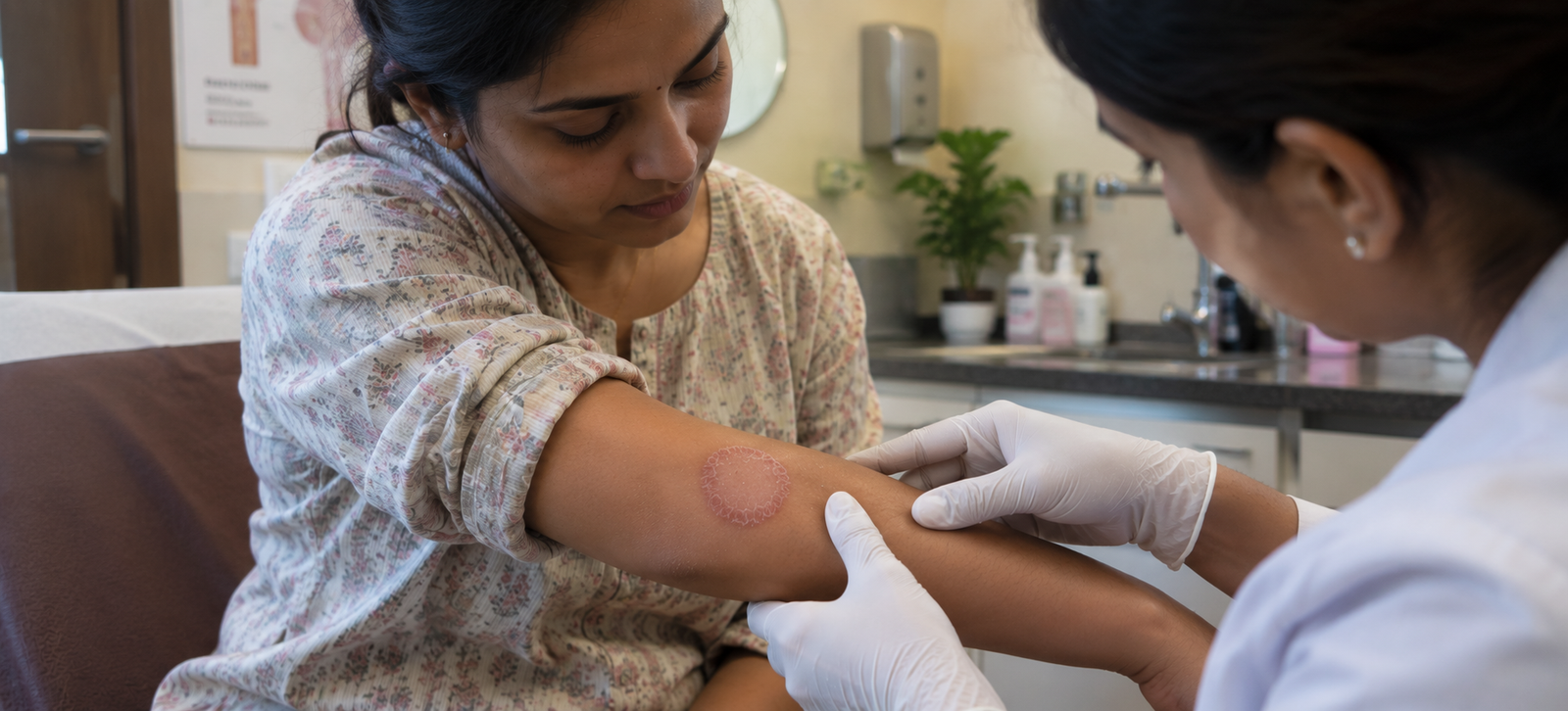
Superficial fungal dermatophytoses (commonly known as ringworm or tinea) thrive in humid climates and can cause severe pruritus, circular scaling rashes, and persistent discomfort.
At Dermiiz, we specialize in eradicating resistant and recurrent fungal infections caused by improper OTC steroid cream usage. Our dermatologists prescribe targeted oral and topical antifungals alongside strict hygiene counseling for definitive clearance.
Fungal infections we treat
Accurate identification through clinical examination ensures complete mycological cure.
Tinea Corporis & Cruris (Ringworm)
Annular, itchy red rings with active scaly borders on the body, groin, or inner thighs.
Tinea Versicolor (Pityriasis)
Hypo- or hyperpigmented patches on back and chest caused by Malassezia yeast overgrowth.
Tinea Pedis (Athlete’s Foot)
Macerated, peeling skin and burning sensation between the toes and on soles.
Steroid-Modified Fungal Infections
Extensive, atypical fungal rashes worsened by OTC combination steroid-antifungal creams.
Benefits of proper fungal treatment
Targeted fungal eradication that restores clear skin and prevents recurrent transmission.

Complete Mycological Clearance
Eradicates the underlying fungal spores to prevent recurrent outbreaks and permanent scarring.
Immediate relief from distressing itching and burning sensations.
Steroid-free protocols that restore natural skin barrier resilience.
Clear guidelines to prevent reinfection among household family members.
Frequently asked questions
Have questions about our treatments? Here are answers to common questions to help guide you on your treatment journey.