
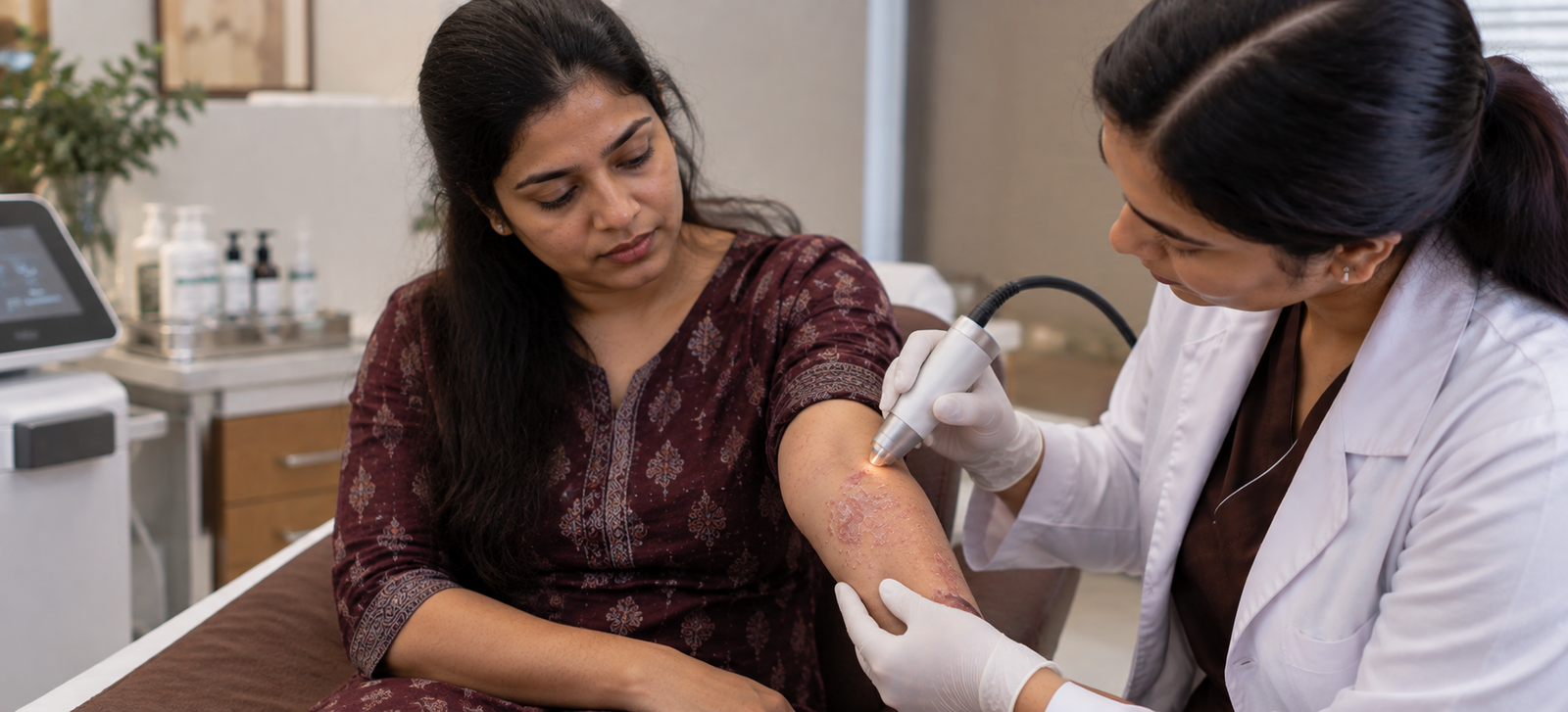
Psoriasis is a chronic, immune-mediated dermatological condition characterized by accelerated keratinocyte proliferation, resulting in erythematous plaques with silvery scales.
At Dermiiz, we offer holistic, evidence-based psoriasis management. Our dermatologists customize treatment plans combining target-specific topicals, specialized phototherapy, barrier repair emollient protocols, and systemic immunomodulators to achieve sustained remission.
What we provide for psoriasis treatment
Your dermatologist selects treatment after assessing the type, severity, affected areas, joint symptoms, medical history, and response to previous care.
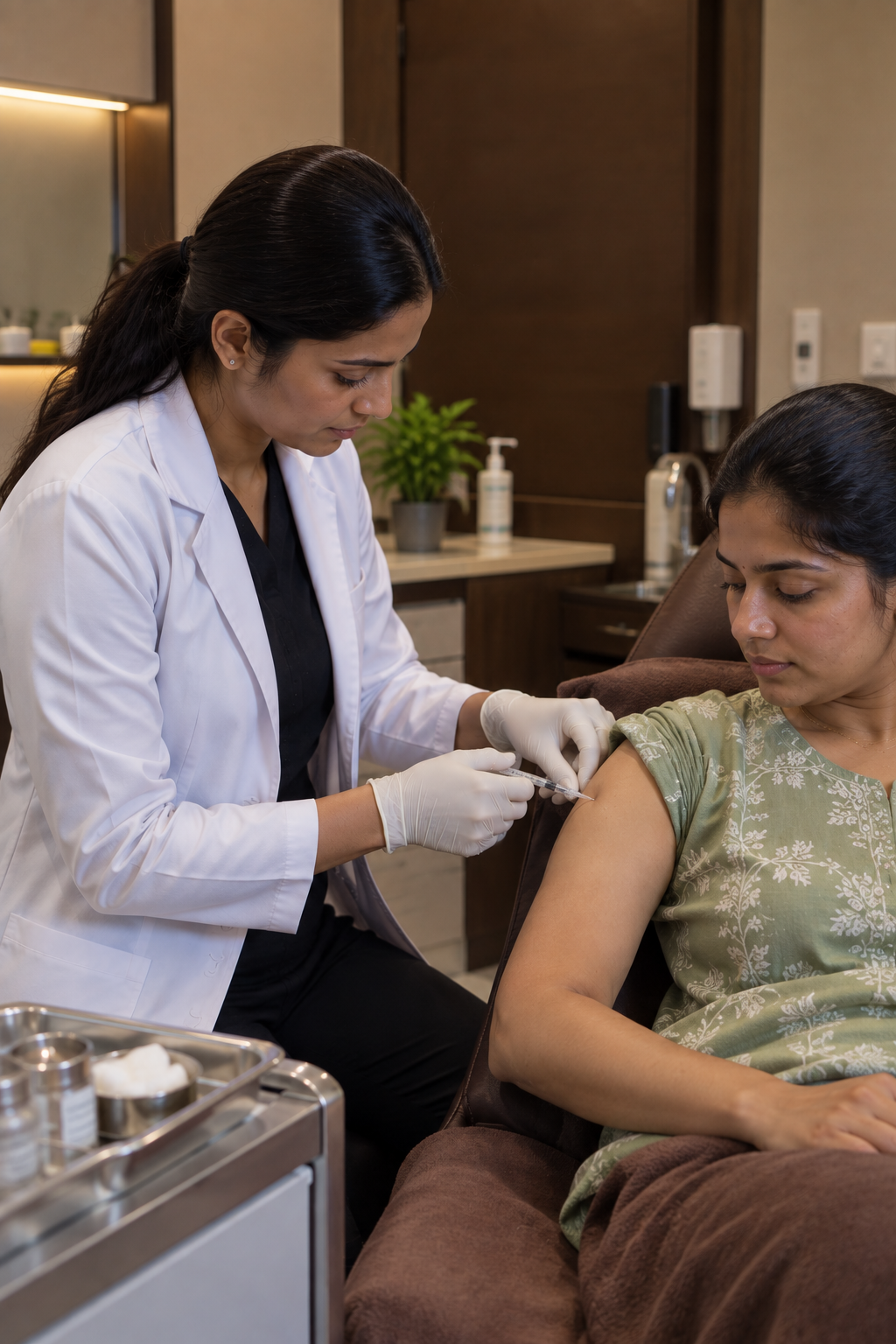
Advanced Biologic Injections
For eligible patients with moderate-to-severe plaque psoriasis or psoriatic arthritis, biologic injections can target specific immune pathways such as TNF-α, IL-17, and IL-23 when conventional treatment has not provided adequate control.
Topical and barrier care: prescription creams, scalp applications, scale control, and medical moisturisers for mild or localised disease.
Phototherapy: dermatologist-supervised light treatment when it is clinically appropriate for the pattern and extent of psoriasis.
Systemic treatment: oral or injectable medicines for extensive, persistent, or joint-associated psoriasis, with regular medical monitoring.
Pre-biologic safety screening: relevant blood tests, tuberculosis and infection screening, organ profiles, and scheduled follow-up before and during treatment.
Biologic medicines are prescription treatments and are not suitable for everyone. The medicine, dose, and schedule are decided only after an in-person dermatologist consultation and safety screening.
Variations of psoriasis we manage
Accurate clinical classification ensures the most effective, safe, and targeted treatment approach.
Plaque Psoriasis
The most common form, presenting as raised, inflamed red lesions covered with silvery white scales.
Guttate Psoriasis
Small, drop-like red spots frequently triggered by bacterial throat infections in younger adults.
Scalp Psoriasis
Persistent plaque formation and stubborn flaking along the hairline and scalp surface.
Inverse & Flexural Psoriasis
Smooth, red lesions found in skin folds such as underarms, groin, and under breasts.
Benefits of specialized psoriasis care
Long-term disease control, symptom relief, and improved quality of daily life.

Sustained Plaque Remission
Slows epidermal cell turnover to relieve itchiness, scaling, and skin tightness effectively.
Significant reduction in itching, burning, and visible skin scaling.
Medically monitored therapies to ensure long-term organ and liver safety.
Empathetic lifestyle, trigger management, and stress counseling.
Frequently asked questions
Have questions about our treatments? Here are answers to common questions to help guide you on your treatment journey.