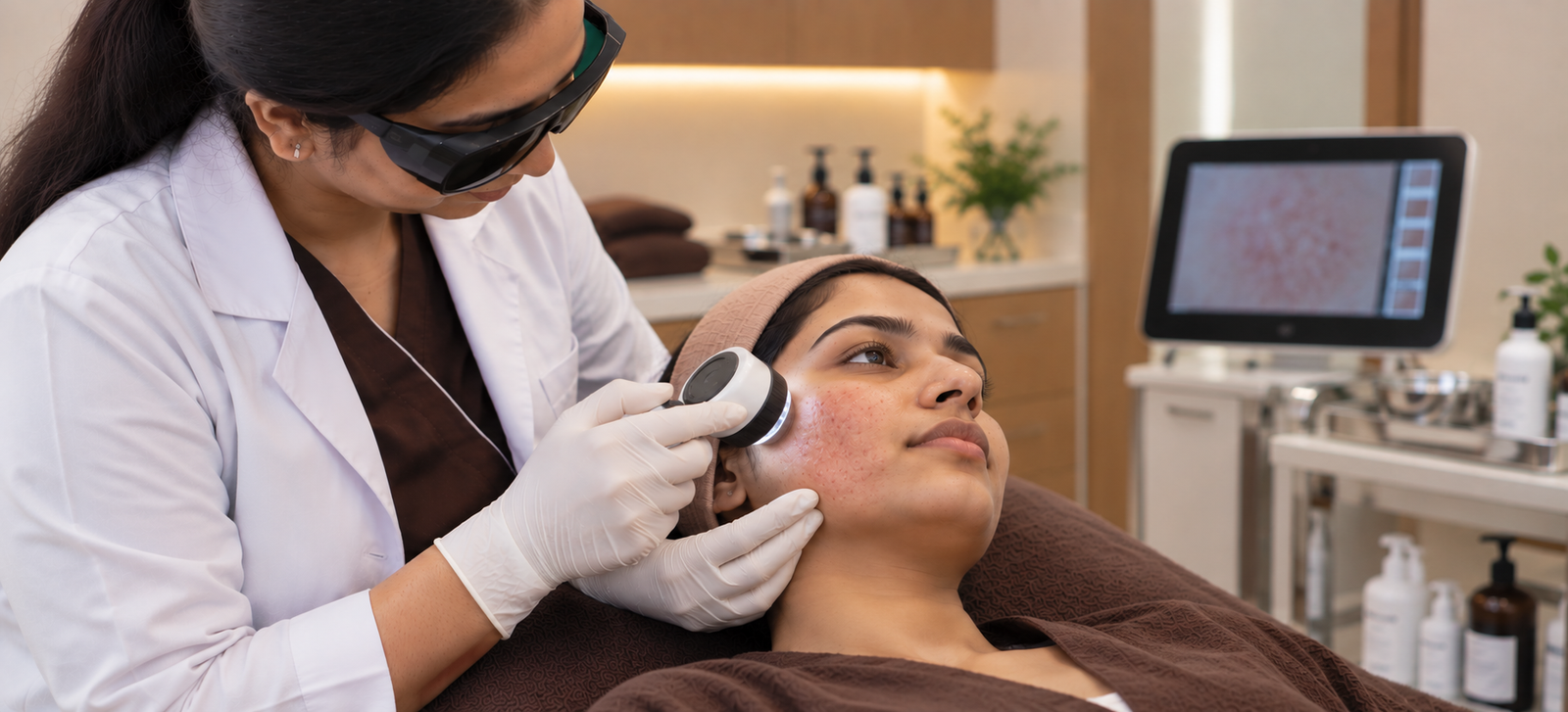
Cutaneous allergic reactions occur when the immune system overreacts to specific environmental
triggers, allergens, cosmetic ingredients, or systemic compounds.
At Dermiiz, our allergy specialists identify specific allergens through rigorous diagnostic
assessments, providing fast-acting symptomatic relief, barrier-restoration protocols, and
advanced Omalizumab injection biological therapy for severe, refractory
urticaria and chronic hives.
Common skin allergic conditions
From sudden hives to chronic contact rashes, we provide tailored
medical interventions.
Acute & Chronic Urticaria (Hives)
Transient itchy wheals that appear suddenly across the body
with intense burning.
Allergic Contact Dermatitis
Localized red, blistering rashes caused by contact with metals,
fragrances, or hair dyes.
Atopic Eczema
Chronic dry, itchy skin flares linked to genetic barrier
dysfunction and environmental allergens.
Photodermatitis
Sun-induced allergic reactions triggered by UV exposure
interacting with photosensitizing agents.
Advanced Immunological Care
at Dermiiz
Omalizumab
Injection Biological Therapy for Urticaria
For patients with severe chronic spontaneous urticaria (CSU) or persistent hives that do not
respond to conventional high-dose antihistamines, Dermiiz provides specialized
Omalizumab injection biological therapy. As an advanced monoclonal antibody
targeting free Immunoglobulin E (IgE), Omalizumab deactivates the allergic cascade before mast
cells can release histamine, delivering life-changing relief and disease control.
Administered under expert clinical supervision, offering relief for patients with
antihistamine-resistant hives.
Benefits of allergy management
Rapid symptom relief combined with long-term preventative allergen
avoidance strategies.
Prompt Itch & Swelling Relief
Stabilizes mast cells to alleviate intense itching,
swelling, and epidermal distress rapidly.
Accurate identification of specific contact allergens and
food triggers.
Non-sedating medical protocols for uninterrupted daily
functioning.
Strengthens compromised skin barrier to reduce future
sensitivity.
Frequently asked questions
Have questions about our treatments? Here are answers to common
questions to help guide you on your treatment journey.
We conduct a comprehensive lifestyle history, physical examination, and when
indicated, allergen testing or patch testing to isolate the causative agent.
If hives are accompanied by swelling of lips, tongue, or difficulty breathing
(anaphylaxis), immediate emergency care is required.
Once the offending allergen is removed and clinical treatment started, most contact
allergic reactions clear within 7 to 14 days.
Yes, PPD (paraphenylenediamine) in permanent hair dyes is a frequent cause of
contact dermatitis on the scalp, forehead, and eyelids.
Wash the area with cool water, avoid scrubbing or perfumed soaps, apply cold
compresses, and consult a dermatologist promptly.
Omalizumab is an internationally approved biological therapy (monoclonal antibody)
specifically indicated for chronic spontaneous urticaria (CSU) and severe hives that
do not improve with conventional antihistamines. Rather than merely masking
symptoms, Omalizumab binds directly to free IgE antibodies in the blood, preventing
them from binding to mast cells and basophils. This halts histamine release at its
root, eliminating itchy welts, redness, and angioedema with proven clinical safety.