
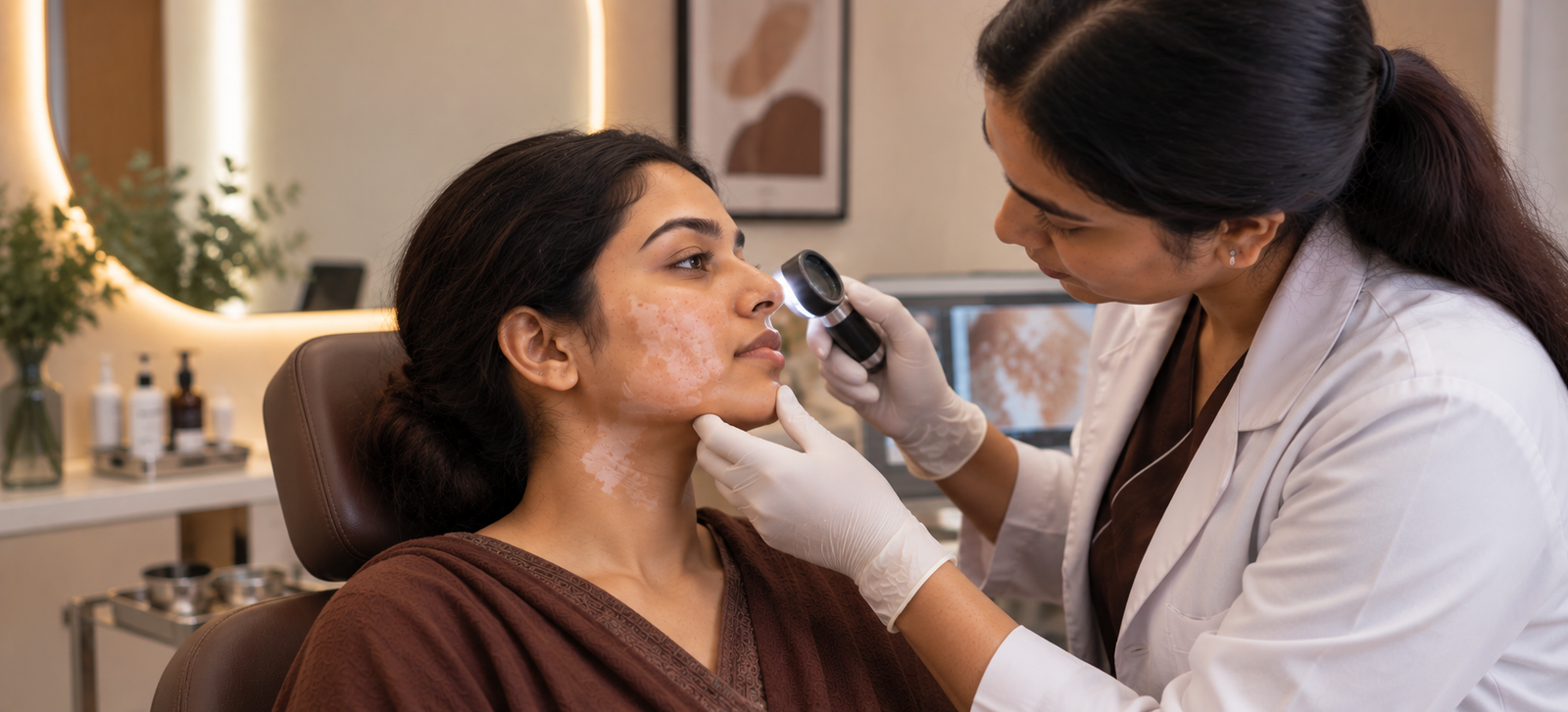
Vitiligo is an autoimmune condition where the body’s immune system mistakenly targets melanocytes, resulting in depigmented, macules and patches of skin.
At Dermiiz, we approach vitiligo with compassion and cutting-edge science. Our protocols focus on halting active disease progression through targeted immunomodulation, followed by stimulating follicular melanocyte reservoirs using narrow-band UVB and topical therapies.
Vitiligo presentations we treat
Classifying stability and pattern is critical to designing the optimal repigmentation protocol.
Non-Segmental Vitiligo
Symmetrical white patches appearing on hands, feet, wrists, and around body orifices.
Segmental Vitiligo
Unilateral depigmentation localized to one dermatomal segment, usually in younger individuals.
Focal & Mucosal Vitiligo
Isolated patches limited to small specific zones or involving lip and oral mucosa.
Stable Vitiligo (Surgical Candidates)
Inactive patches that have not spread for over one year, ideal for melanocyte grafting.
Benefits of vitiligo care
Systematic approach to arrest active spread and restore natural melanocyte pigmentation.

Targeted Repigmentation
Stimulates dormant hair follicle melanocytes to migrate outward and re-pigment white patches.
Stops active disease progression using safe, modern immunomodulators.
Targeted Narrow-Band UVB therapy with minimal exposure to uninvolved skin.
Comprehensive psychological support and guidance on camouflage options.
Frequently asked questions
Have questions about our treatments? Here are answers to common questions to help guide you on your treatment journey.